
Sustainability Practices
Focusing on sustainable business practices, individual actions for sustainability, and how carbon credits play a role in them.
Subscribe
"*" indicates required fields

Natural climate solutions can help businesses remove carbon, improve soil health and use organic materials responsibly. Learn how plant-based carbon capture, biochar, verification and durable storage can support a credible corporate climate strategy.
Biochar Carbon Credits: Waste Biomass to Carbon Removal
by Anna Jacobs
/ June 29, 2026

Biochar carbon credits turn waste biomass into durable carbon removal by converting organic material into stable carbon that can be stored in soil for centuries. This article explains how the process works and why verified biochar credits are gaining traction with corporate buyers.
Why Biochar Carbon Credits Are Becoming a Practical Choice for Corporate Carbon Removal
by Anna Jacobs
/ May 19, 2026
Biochar carbon credits are becoming a practical option for corporate carbon removal because they combine measurable carbon storage, durable sequestration, third-party verification, and real-world applications in agriculture, waste management, and sustainability strategy.
Carbon Sequestration Services: Permanent Carbon Removal
/ April 28, 2026
Carbon sequestration services are evolving beyond temporary offsets. Discover how permanent carbon removal solutions store carbon for centuries while helping businesses meet climate goals and reduce Scope 3 emissions.
Regenerative Agriculture: 2026 Corporate Strategy
/ February 17, 2026
Discover why regenerative agriculture is becoming a core 2026 corporate strategy. Learn how businesses can meet Scope 3 goals, strengthen supply chains, and achieve permanent carbon removal through scalable, nature-based solutions.
Regenerative Farming: Earn Up to $1,000/Acre
/ January 30, 2026
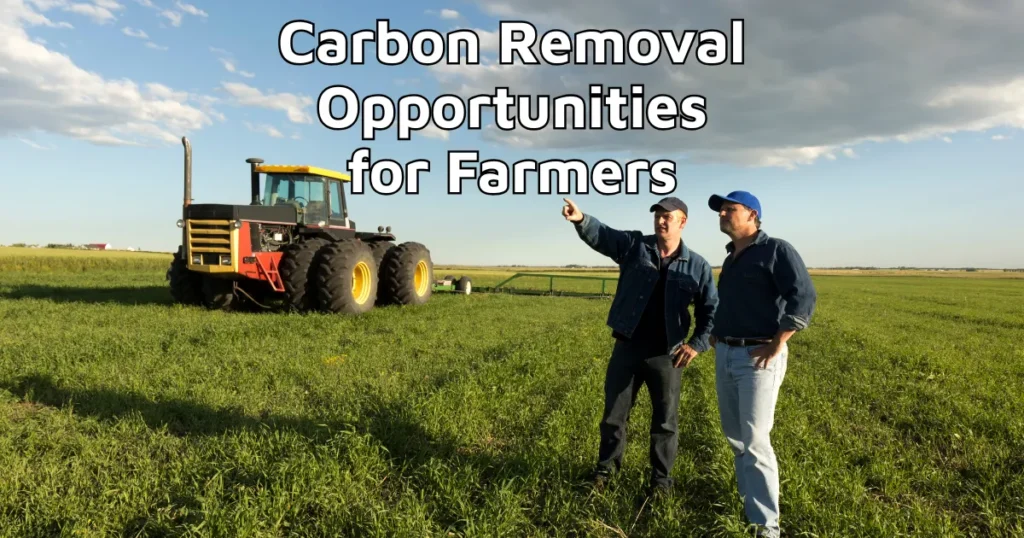
American agriculture is under pressure. The USDA projects net farm income will decline by $4.1 billion in 2026, falling to $153.6 billion — a 2.6% drop from 2025. Global commodity prices are projected to hit their lowest level in six years, marking the fourth consecutive year of decline.
Nature-Based Carbon Sequestration: 2026 Playbook
by Anna Jacobs
/ January 23, 2026

The voluntary carbon market is projected to reach $3.5 billion in 2026, with analysts forecasting growth to $17.4 billion by 2035.
Regenerative Agriculture: Why Biochar Is the Enterprise Solution
/ November 28, 2025
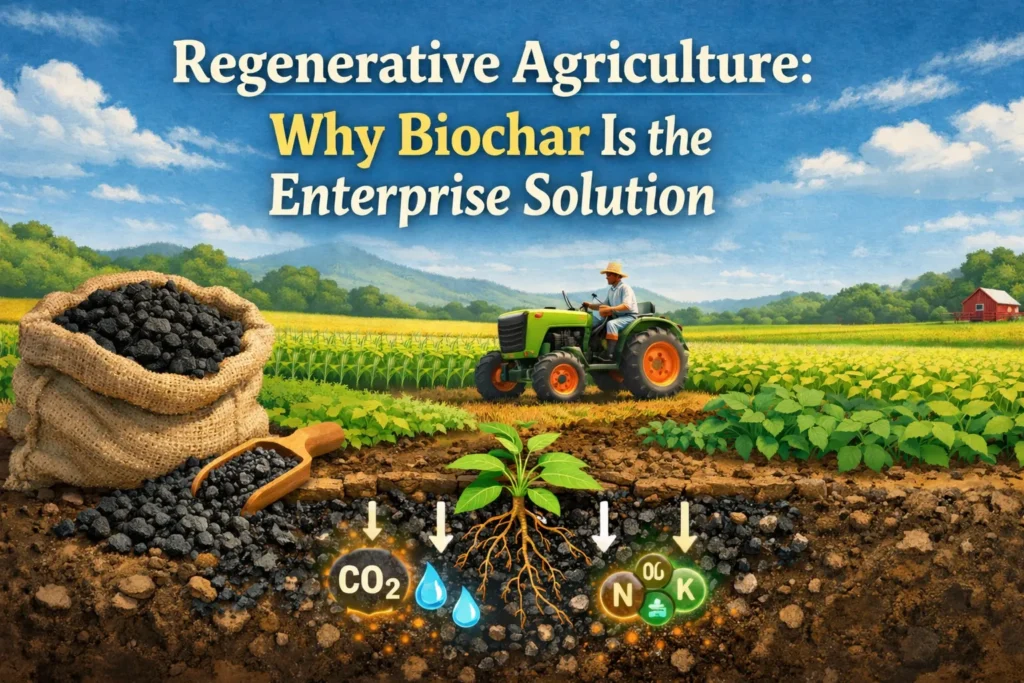
Regenerative agriculture is transforming corporate sustainability—but traditional practices alone can’t deliver the speed, permanence, and scale Fortune 500 companies need. Here’s why crop-based biochar is the missing link.
Biochar: The Enterprise Solution for Permanent Carbon Removal
by Anna Jacobs
/ November 17, 2025
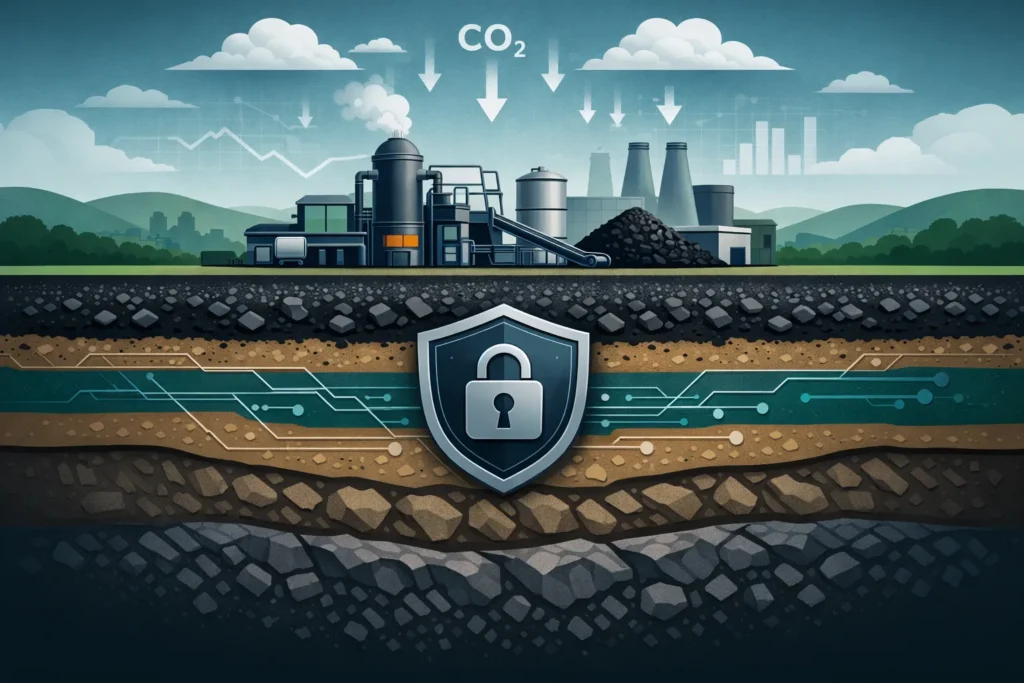
Biochar is a carbon-rich material created through pyrolysis that locks carbon in soil for centuries, while simultaneously improving soil health, reducing methane and nitrous oxide emissions, and enabling scalable industrial applications. For Fortune 500 companies seeking verifiable, permanent carbon removal credits…
Biochar Agricultural Direct Air Capture: The CEO Perspective
/ November 13, 2025

Corporations have made public, legally binding commitments to reach Net Zero by 2030 or 2050. Yet, the tools currently available to them are often out of sync with the urgency of their balance sheets.