
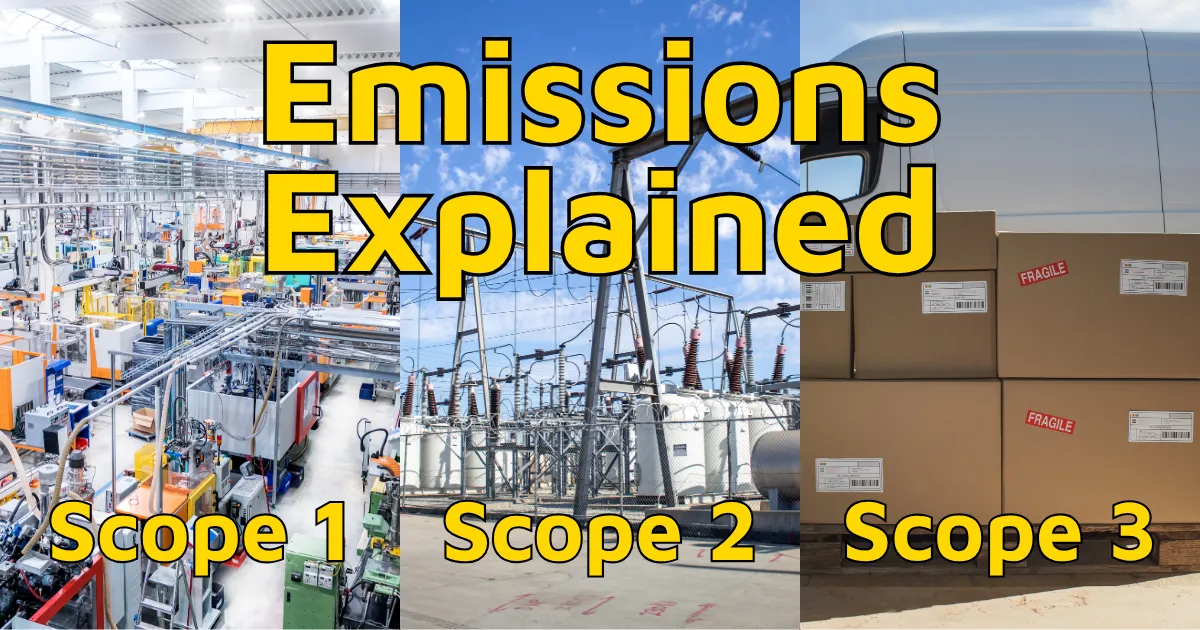

Understanding Scope 1, 2 and 3 emissions helps a business identify where its greenhouse gas footprint originates and where reductions can have the greatest impact.
The three-scope system provides a consistent way to organize direct and indirect emissions. It also prevents companies from focusing only on fuel and electricity while overlooking supply chains, transportation, purchased materials and product use.
What Are Scope 1, 2 and 3 Emissions?
Scope 1, 2 and 3 emissions are categories used to organize a company’s greenhouse gas inventory. The categories are based on where the emissions occur in relation to the reporting company.
The system comes from the GHG Protocol Corporate Standard, one of the most widely used frameworks for corporate greenhouse gas accounting.
The scopes are not rankings of importance. Scope 3 emissions are not automatically less important than Scope 1 emissions. In many industries, Scope 3 represents the largest part of the company’s total footprint.
What Are Scope 1 Emissions?
Scope 1 includes direct greenhouse gas emissions from sources the company owns or controls.
Examples include fuel burned in company-owned boilers, furnaces or generators. Gasoline and diesel used by company vehicles are also included, along with emissions from manufacturing processes and refrigerant leaks from cooling equipment.
Because these sources are under the company’s direct operational control, Scope 1 is often a practical place to begin reduction planning.
A business may reduce Scope 1 emissions by improving equipment efficiency, switching fuels, electrifying vehicles or machinery, repairing leaks and changing industrial processes.
Our article on Scope 1 emissions and carbon-credit additionality explains how direct emissions relate to verified climate action.
What Are Scope 2 Emissions?
Scope 2 includes indirect emissions associated with purchased electricity, steam, heating or cooling.
The emissions physically occur at the facility generating the energy, but they are attributed to the company purchasing and using that energy.
Office electricity, factory power, district heating, purchased steam and purchased cooling can all contribute to Scope 2 emissions.
Companies may reduce Scope 2 emissions by improving energy efficiency, generating renewable energy on-site or purchasing lower-emission electricity through recognized procurement arrangements.
The GHG Protocol Scope 2 Guidance explains how organizations should account for and report emissions from purchased energy.
What Are Scope 3 Emissions?
Scope 3 includes indirect emissions throughout the company’s value chain that are not already counted as Scope 2 emissions.
Upstream Scope 3 emissions may come from purchased goods, supplier operations, freight, business travel, employee commuting, waste and capital equipment.
Downstream emissions may come from transportation of sold products, customer use, product disposal, leased assets, franchises or investments.
The GHG Protocol Scope 3 Standard provides guidance for measuring and reporting these value-chain emissions.
Our detailed guide to Scope 3 emissions and supply-chain carbon liability explains why this category is strategically important.
Examples of Scope 1, 2 and 3 Emissions
A manufacturer provides a useful example of how the three categories work together.
Natural gas burned in the company’s own production equipment would be Scope 1. Electricity purchased to operate the factory would be Scope 2. Emissions associated with raw materials, suppliers, freight, employee travel and customer use of the finished product would generally fall under Scope 3.
A service company may have relatively low Scope 1 emissions but significant Scope 2 emissions from office electricity and substantial Scope 3 emissions from purchased technology, employee travel, data services and investments.
The categories vary by industry, but the underlying principle remains the same: Scope 1 is direct, Scope 2 comes from purchased energy and Scope 3 covers the broader value chain.
Why Scope 3 Is Often the Hardest Category
A company can usually obtain its own fuel and utility records. Scope 3 data may need to come from hundreds or thousands of suppliers, transportation companies, customers and other business partners.
Many organizations begin with estimates based on spending data, industry averages or general activity information. Over time, stronger inventories replace those broad estimates with supplier-specific and product-specific data.
Reducing Scope 3 emissions may require changes in purchasing, product design, transportation, supplier requirements, customer education and end-of-life management.
This makes Scope 3 both difficult and strategically important. A company may have limited direct control over these emissions, but it can still influence them through business decisions and supplier relationships.
How to Measure Scope 1, 2 and 3 Emissions
Measurement begins by defining which business entities, facilities and activities are included in the inventory. The company must also choose a reporting period and apply consistent accounting methods.
Common sources of information include:
- Fuel invoices, utility bills and vehicle records
- Refrigerant and equipment-maintenance records
- Purchasing, freight, travel and waste data
- Supplier reports and product information
- Customer-use and product-disposal estimates
The EPA Simplified GHG Emissions Calculator can help organizations begin estimating annual Scope 1, Scope 2 and selected Scope 3 emissions.
A company does not need perfect data before beginning, but it should document assumptions, improve data quality over time and avoid claiming more precision than the evidence supports.
How Companies Can Reduce Their Emissions
Scope 1 reductions often involve equipment, fuel and operational changes. Scope 2 reductions typically involve efficiency, renewable energy and electricity purchasing. Scope 3 reductions usually require collaboration with suppliers, customers and logistics providers.
The most effective plan focuses first on the largest and most manageable emissions sources. A company should consider the potential reduction, cost, implementation time and operational benefits of each project.
Businesses that need guidance can explore the role of a carbon consultant in emissions planning.
Where Carbon Credits Fit
Carbon credits should not be subtracted from a company’s gross Scope 1, 2 and 3 emissions inventory. The company should report its physical emissions first and separately disclose any credits purchased and retired.
This separation keeps operational performance visible and prevents credits from concealing an unchanged or increasing emissions footprint.
After feasible reductions are underway, verified carbon removal may help address residual emissions. Dynamic Carbon Credits’ enterprise carbon removal program is designed to support that part of the strategy.
Use Accurate Emissions Language
Terms such as carbon dioxide equivalent, additionality, permanence, avoidance and removal have specific meanings. Using them consistently improves reporting and reduces the risk of misleading claims.
The Dynamic Carbon Credits glossary explains common carbon-market and emissions-accounting terminology.
Need help understanding your company’s emissions? Contact Dynamic Carbon Credits to discuss measurement, reduction planning and verified carbon removal.
Frequently Asked Questions
What is the difference between Scope 1 and Scope 2?
Scope 1 covers direct emissions from sources the company owns or controls. Scope 2 covers indirect emissions associated with purchased electricity, steam, heating or cooling.
What are examples of Scope 3 emissions?
Examples include purchased materials, supplier emissions, freight, employee travel, waste, customer use of products and product disposal.
Are Scope 3 emissions mandatory to report?
Reporting obligations depend on the jurisdiction, disclosure framework and company. Even when reporting is voluntary, Scope 3 may be important for understanding the company’s full value-chain impact.
Do carbon credits reduce Scope 1, 2 or 3 emissions?
Carbon credits do not eliminate the physical emissions in the inventory. Credits and retirement records should generally be disclosed separately from gross Scope 1, 2 and 3 emissions.