
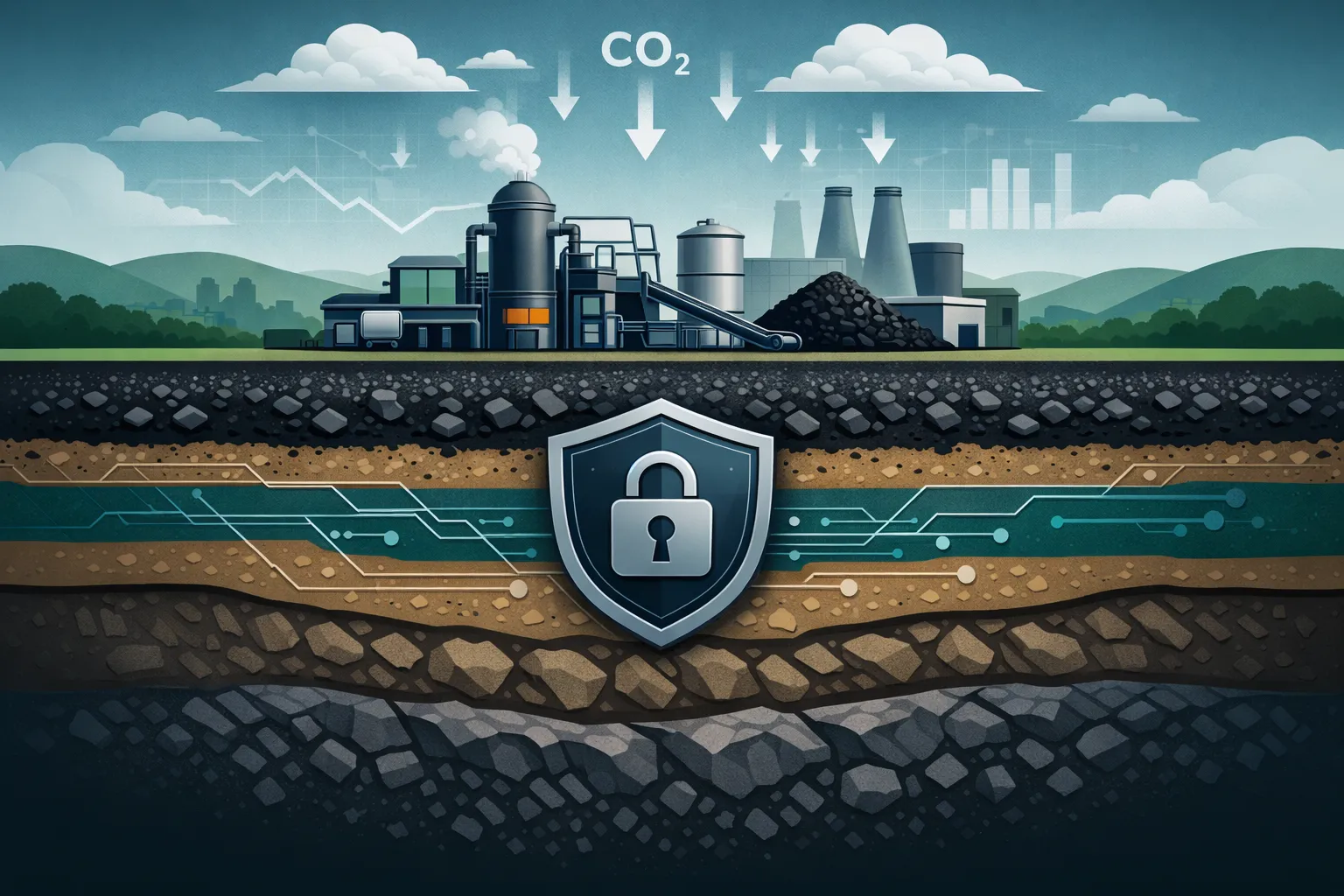
Biochar is a carbon-rich material created through pyrolysis that locks carbon in soil for centuries, while simultaneously improving soil health, reducing methane and nitrous oxide emissions, and enabling scalable industrial applications. For Fortune 500 companies seeking verifiable, permanent carbon removal credits, crop-based biochar represents the gold standard in true carbon sequestration—delivering immediate, auditable results that align with corporate ESG timelines.

The Carbon Removal Imperative for Enterprise
In the race to net-zero, corporate sustainability leaders face a fundamental challenge: finding carbon removal solutions that are permanent, scalable, and verifiable. While carbon offset markets have grown exponentially, many traditional approaches fail to deliver the permanence and additionality that Fortune 500 companies need to satisfy increasingly stringent ESG reporting requirements.
Enter biochar—a centuries-old solution now emerging as the cornerstone of modern carbon removal strategies. With the global biochar market projected to reach $695.1 million by 2031, this isn’t a niche technology; it’s a transformative approach to atmospheric carbon removal that addresses the core concerns of enterprise sustainability programs.
“The Time Value of Carbon is something most carbon markets overlook entirely,” explains Beau Parmenter, CEO of Dynamic Carbon Credits. “When a corporation commits to carbon neutrality, they need solutions that deliver now—not promises of sequestration decades in the future. Crop-based biochar, produced through our proprietary process, provides immediate, verifiable carbon removal that aligns with quarterly reporting cycles.”
Understanding Biochar: Science Meets Scalability
What Is Biochar?
Biochar is a stable, carbon-rich material produced through pyrolysis—the thermal decomposition of organic biomass in an oxygen-limited environment. Unlike composting or natural decomposition, which releases captured carbon back into the atmosphere, pyrolysis chemically transforms organic carbon into highly stable molecular structures that resist environmental degradation.
The result is a porous, charcoal-like material that can remain locked in soil for hundreds to thousands of years. This permanence is what distinguishes biochar from other carbon removal approaches and makes it particularly valuable for corporate carbon credit portfolios.
The Permanence Advantage
Research in 2025 confirms that biochar’s stability depends on several key factors:
- Feedstock selection: The biomass source significantly influences final carbon stability
- Pyrolysis temperature: Higher temperatures (450-550°C) produce biochar optimized for long-term carbon sequestration
- Hydrogen to organic carbon ratio (H/Corg): A low ratio indicates more lasting carbon sequestration
Leading carbon credit verification platforms have responded to this science. Puro.earth’s 2025 methodology update now certifies biochar durability at CORC200+, confirming sequestration lasting several centuries. This third-party validation provides the credibility that Fortune 500 sustainability officers require for their climate commitments.
The Four-Stage Biochar Lifecycle: From Capture to Credit
At Dynamic Carbon Credits, our biochar process follows a transparent, verifiable four-stage lifecycle designed specifically for enterprise-grade carbon removal:
Stage 1: Capture
Our proprietary crop—a fast-growing, high-biomass plant reaching 12-15 feet tall with a massive root system extending 33 feet deep and 12 feet wide—captures atmospheric CO₂ through natural photosynthesis. Unlike industrial Carbon Capture and Storage (CCS) that addresses emissions abatement, this is true Direct Air Capture through Photosynthesis (DAC-P): removing carbon that already exists in the atmosphere.
The 144-day growth lifecycle means corporations can see measurable carbon capture within a single quarter—a stark contrast to forestry-based offsets that require decades to mature.
Stage 2: Sequester
Harvested biomass undergoes controlled pyrolysis, transforming organic material into stable biochar. This thermochemical conversion locks carbon into molecular structures with extraordinary resistance to decomposition, achieving permanence measured in centuries rather than years.
Stage 3: Regenerate
Biochar is returned to agricultural soil, where it delivers compounding benefits:
- Methane mitigation: Multiple scientific mechanisms actively reduce soil methane emissions (detailed in the section below)
- Nitrous oxide reduction: Studies show consistent N₂O reductions, particularly in loam and clay soils
- Soil biology boost: The porous structure creates habitat for beneficial microorganisms
- Reduced synthetic fertilizer dependency: Progressive mineralization releases inherent nutrients (nitrogen, phosphorus, potassium, calcium, magnesium) into the soil
Stage 4: Verify
Northern Trust’s digital solution for institutional voluntary carbon credits provides blockchain-enabled verification that tracks carbon from field to ledger. This institutional-grade transparency meets the standards that Fortune 500 companies require, aligning with OECD recommendations for combating greenwashing in voluntary carbon markets.
How Biochar Reduces Methane Emissions: The Science
One of biochar’s most significant—yet often underappreciated—benefits is its ability to substantially reduce methane (CH₄) emissions from soil. Methane is approximately 80 times more potent than CO₂ as a greenhouse gas over a 20-year period, making its mitigation critical for near-term climate impact. The mechanisms by which biochar achieves this reduction are multifaceted and scientifically robust.
Enhanced Soil Aeration and Oxygen Diffusion
Biochar’s highly porous structure dramatically improves soil aeration. This increased oxygen availability creates an aerobic environment that fundamentally shifts the balance between methane-producing and methane-consuming microorganisms:
- Methanotroph proliferation: Better aeration increases the abundance of methanotrophic proteobacteria—microorganisms that actively consume methane as their energy source.
- Methanogen suppression: Improved oxygen diffusion simultaneously reduces the proportion of nih.gov, the microorganisms responsible for producing methane.
Research demonstrates that biochar’s porous structure provides an ideal habitat for methane-oxidizing communities to thrive, with studies showing methane-consuming microbes flourishing within biochar’s architecture.
Direct Adsorption of Methane and Precursor Compounds
Biochar’s extensive surface area—characterized by abundant pore structures and surface functional groups—enables direct adsorption of methane and methane-related substances. This physical capture mechanism complements the biological processes, creating multiple pathways for emission reduction.
Studies have demonstrated that biochar can adsorb gas precursors on its surface, preventing them from converting to methane in the first place. This dual action—both capturing existing methane and preventing its formation—makes biochar uniquely effective.
Modification of Soil Physicochemical Properties
Biochar fundamentally alters key soil characteristics that regulate methane dynamics:
- Soil porosity and aggregation: Improved soil structure enhances gas exchange
- pH optimization: Biochar adjusts soil pH to levels that favor methane-oxidizing microorganisms
- Moisture regulation: Better water management creates conditions unfavorable for anaerobic methane production
- Nitrogen dynamics: Modified nitrogen availability influences the microbial communities involved in methane cycling
Quantified Emission Reductions
The scientific literature documents substantial methane reductions across various applications:
- Paddy field studies: Biochar application reduced cumulative CH₄ emissions by up to 42.9% while simultaneously increasing crop yields
- Composting applications: Biochar-amended composting achieved CH₄ emission reductions of 58% (±22%)
- Agricultural soils: Applications of 5-40 tonnes per hectare reduced CH₄ emissions by 8.6-89.6% depending on soil type and conditions
- Landfill cover applications: Hydrophobic biochar-modified soil covers achieved removal rates up to 98.8% under optimized conditions
The Role of Pyrolysis Temperature
Biochar produced at higher temperatures (>600°C) tends to have greater surface area and minimal labile (unstable) carbon, making it more effective for methane reduction. This is because:
- Higher-temperature biochar has more stable carbon structures
- Increased porosity provides more habitat for methane-oxidizing microorganisms
- Reduced volatile matter prevents inadvertent methane generation
At Dynamic Carbon Credits, our pyrolysis process is optimized to produce biochar with ideal characteristics for both long-term carbon sequestration and maximum methane reduction.
Agricultural Applications: Regenerating Soil While Sequestering Carbon
The agricultural sector represents biochar’s most established application domain, with benefits extending far beyond carbon storage.
Soil Structure and Water Retention
Biochar’s highly porous nature—characterized by large surface area—dramatically improves soil physical properties. Research demonstrates enhanced water retention capacity, which is particularly valuable as climate change intensifies drought conditions across agricultural regions.
For corporate sustainability programs with agricultural supply chain exposure, biochar application offers a dual benefit: securing long-term soil productivity while generating verified carbon removal credits.
Nutrient Availability and Crop Yields
Biochar acts as a nutrient reservoir and slow-release delivery system. Its ability to adjust soil pH improves the bioavailability of essential nutrients including nitrogen, phosphorus, potassium, calcium, and magnesium. Studies confirm improved crop yields when biochar is applied strategically, creating economic value alongside environmental benefits.
Microbial Ecosystem Support
The porous architecture of biochar provides habitat for beneficial soil microorganisms, supporting the biological activity essential for healthy, productive soils. This “biology boost” accelerates natural nutrient cycling and builds soil resilience—a critical consideration as climate volatility increases pressure on global food systems.
Industrial Applications: Beyond the Field
While agriculture represents biochar’s foundation, innovative industrial applications are expanding its utility across multiple sectors.
Construction and Building Materials
Biochar is finding applications in sustainable construction:
- Concrete additive: Replacing a portion of cement in concrete mixtures reduces the carbon intensity of construction while maintaining structural integrity
- Asphalt enhancement: Biochar-modified asphalt demonstrates improved durability and reduced thermal conductivity
- Insulation material: The porous, lightweight structure provides thermal insulation properties
For real estate developers and construction companies with sustainability mandates, biochar-enhanced materials offer measurable carbon reduction in building lifecycles.
Metallurgical and Chemical Industries
Industrial-scale biochar applications include:
- Steel and silicon production: Biochar serves as a reduction agent, offering a renewable alternative to coal-based inputs
- Activated carbon production: Biochar serves as a precursor for activated carbon fibers and carbon aerogels used in gas storage and filtration systems
- Sorbent applications: Biochar captures and stores carbon in industrial carbon capture processes
Energy Storage and Electronics
Emerging research highlights biochar’s potential in advanced energy systems. Biochar carbonized at 800-1000°C demonstrates significant electrical conductivity, opening opportunities for use in electrode materials and supercapacitors. This positions biochar as a sustainable alternative to synthetic carbon materials in electronics manufacturing.
Environmental Remediation
Engineered biochar excels at pollution removal:
- Heavy metal immobilization: Biochar binds heavy metals in contaminated soils, reducing their bioavailability and environmental mobility
- Water filtration: The adsorptive properties enable effective water purification
- Air quality improvement: Biochar filters and removes airborne pollutants
- Odor control: Natural odor absorption makes biochar valuable in waste management facilities
Waste Management and Circular Economy
Biochar transforms agricultural and municipal residues into valuable resources, supporting circular economy models. For corporations managing organic waste streams, pyrolysis offers a pathway to convert liabilities into assets while generating verified carbon removal credits.
The True Carbon Removal Premium
Not all carbon credits are created equal. The voluntary carbon market distinguishes between emissions avoidance credits (preventing future emissions) and removal credits (extracting carbon already in the atmosphere).
Crop-based biochar represents true carbon removal—a premium asset class commanding significantly higher valuations than avoidance-based alternatives. While commodity carbon credits may trade at lower price points, enterprise-grade removal credits that meet stringent permanence and additionality requirements represent a distinct category.
“Fortune 500 companies are increasingly recognizing that their climate commitments require removal, not just avoidance,” notes Beau Parmenter. “Our crop-based biochar delivers clean additionality—carbon that wouldn’t be removed without the specific action we’re taking. That’s the foundation of credible corporate carbon neutrality.”
Meeting Enterprise Sustainability Requirements
Alignment with Corporate Reporting Cycles
Traditional carbon removal approaches—forestry projects, soil carbon accumulation—operate on timelines measured in decades. This creates fundamental misalignment with corporate quarterly and annual reporting requirements.
Dynamic Carbon Credits’ 144-day crop lifecycle enables carbon removal that matches business planning horizons. Sustainability teams can project and verify carbon credits within the same fiscal year they’re purchased, eliminating the uncertainty that plagues longer-horizon offset programs.
Scope 1, 2, and 3 Emissions Coverage
For corporations addressing their full emissions footprint, biochar-based carbon removal provides flexibility:
- Scope 1 (Direct emissions): Biochar application to corporate agricultural operations directly reduces methane and nitrous oxide emissions from soil
- Scope 2 (Indirect emissions): Carbon removal credits offset emissions from purchased electricity and energy
- Scope 3 (Value chain emissions): Supply chain applications enable upstream and downstream emissions reductions
Transparency and Verification
Institutional carbon credit buyers increasingly demand robust verification and third-party certification. Dynamic Carbon Credits leverages Northern Trust’s digital solution for institutional voluntary carbon credits, providing blockchain-enabled traceability from field to ledger. This institutional-grade infrastructure—trusted by the world’s leading financial institutions—delivers the transparency that Fortune 500 corporations require, aligning with recommendations from organizations like the OECD and World Bank for combating greenwashing in voluntary carbon markets.
The Path Forward: Biochar in Corporate Climate Strategy
As the science of carbon permanence advances and verification methodologies mature, biochar is positioned to play an increasingly central role in corporate sustainability portfolios.
Industrial biochar systems are estimated to achieve sequestration of 0.3-2 Gt CO₂ per year by 2050—a scale meaningful enough to contribute significantly to global climate goals. For individual corporations, the opportunity is clear: early adoption of premium carbon removal credits positions organizations as climate leaders while securing access to verified, permanent sequestration capacity.
The biochar opportunity extends beyond compliance. Companies deploying biochar in their agricultural supply chains benefit from improved soil productivity and resilience—strategic advantages as climate volatility intensifies. Those incorporating biochar-enhanced materials in construction reduce lifecycle carbon intensity. And those investing in verified removal credits build the credibility that stakeholders, regulators, and consumers increasingly demand.
Enterprise-Grade Carbon Removal
Biochar represents the convergence of ancient wisdom and modern science—a carbon removal solution that delivers permanence, scalability, and verifiability at enterprise scale.
For Chief Sustainability Officers navigating the complexities of corporate climate commitments, crop-based biochar offers a compelling value proposition: immediate, measurable carbon removal that aligns with business timelines, regenerates agricultural systems, and meets the highest standards of verification and transparency.
The question isn’t whether biochar will play a role in corporate sustainability—it’s whether your organization will be among the leaders who recognize its potential today.
Dynamic Carbon Credits provides enterprise-grade carbon removal solutions for Fortune 500 corporations. Our proprietary crop-based biochar process delivers verified, permanent carbon sequestration aligned with corporate ESG requirements. Contact us to discuss how biochar can advance your sustainability goals.